


Systemwide Impact of International Relations Actors on the Cognitive Space as a Factor of Power in World Politics

https://doi.org/10.53658/RW2025-4-4(18)-118-127
Abstract
This article provides a comprehensive analysis of the influence of international actors on the cognitive space and its significance as a strategic resource in the global political system. It examines the current state of the international environment, characterized by a high degree of conflict potential, which highlights the need for a detailed study of key issues requiring in-depth theoretical and empirical analysis. The focus is on the structure and systematic nature of influence on the cognitive sphere, as well as its potential to become a significant factor in geopolitical power. Institutions focused on long-term development include a wide range of organizations, including universities, educational institutions, specialized language and culture institutes. These institutions not only carry out educational functions but also play a crucial role in shaping society’s intellectual capital and cultural identity. The study focuses on the phenomenon of hybrid influence on cognitive space, illustrating the multifaceted nature and complexity of modern influence strategies. Current trends and mechanisms for influencing cognitive space are analyzed, demonstrating their diversity and high effectiveness. A historical perspective allows for a classification of the stages of evolution of technologies that form the technological basis for influencing cognitive spaces. Based on this research, the author formulates practical recommendations for managing cognitive spaces, including defining goals and content for this process. These recommendations are based on a comprehensive analysis of current trends and mechanisms, enabling well-founded and effective proposals for managing cognitive space within international relations.
About the Author
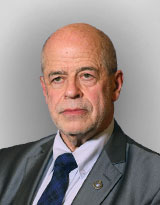
A. I. Fattakhov
Diplomatic Academy of the Ministry of Foreign Affairs of the Russian Federation
Russian Federation
Russian Federation
Azamat I. Fattakhov. Postgraduate of Diplomatic Academy of the Ministry of Foreign Affairs of the Russian Federation.
Address: building 1, 53/2, Ostozhenka st., Moscow, 119021, Russian Federation
References
1. Belous A.I. Technologies, Methods and Tools of 21st-Century Wars. Moscow: Tekhnosfera [Technosphere], 2023. 527 p. [In Russian].
2. Ilnitsky A.M. The Strategy of Mental Security. Voennaya mysl’ [Military Thought]. 2022; 4:24–35 [In Russian].
3. Outlines of Russia’s Civilizational Future: A Collective Monograph / ed. by A.P.Sigal. Moscow: Fortis Press, 2024 [In Russian].
4. Manoylo A.V. Information Wars and Color Revolutions. Moscow: Goryachaya Liniya – Telekom [Hotline – Telecom], 2023. 496 p. [In Russian].
5. Medushevsky A.N. Cognitive Warfare: Social Control, Mind Manipulation, and the Instrument of Global Dominance (Part 1). Voprosy teoreticheskoj ekonomiki [Issues of Theoretical Economics]. 2023; 2:85–98 [In Russian].
6. Medushevsky A.N. Cognitive Warfare: Social Control, Mind Manipulation, and the Instrument of Global Dominance (Part 2). Voprosy teoreticheskoj ekonomiki [Issues of Theoretical Economics]. 2023; 3:92–107 [In Russian].
7. Mikhailov I.F. How is a Cognitive Theory of Society Possible in Our Time? Elektronnyj filosofskij zhurnal Vox [Vox Online Philosophical Journal]. 2018; 25:191–200 [In Russian]. Available from: http://vox-journal.org (accessed: 06.06.2025).
8. Rogan E. The Arabs: A History (16th–21st Centuries). Moscow: Alpina Non-Fiction, 2019 [In Russian].
9. Fattakhov A.I. Cognitive and Mental Operations as a Means of Influencing States and Societies in International Relations. Informacionnye vojny [Information Wars]. 2025;1(73):12–20 [In Russian].
10. Du Cluzel F. Cognitive Warfare. Bordeaux: Innovation Hub, 2021 [In English].
Review
For citations:
Fattakhov A.I. Systemwide Impact of International Relations Actors on the Cognitive Space as a Factor of Power in World Politics. Russia & World: Sc. Dialogue. 2025;(4):118-127. (In Russ.) https://doi.org/10.53658/RW2025-4-4(18)-118-127
Views:
339
JATS XML



 Email this article