


Informational Control as a Mechanism of Global Governance, Modern Status, Methods and Key Actors

https://doi.org/10.53658/RW2025-4-4(18)-58-74
Abstract
This article examines the phenomenon of information warfare as the most important tool of global governance in the modern international context. The author analyzes it as a cognitive form of warfare focused on controlling perception, destroying identity, and delegitimizing the enemy. The study analyzed anti-Russian information campaigns initiated by unfriendly Western states, which made it possible to identify methods and stages of cognitive impact, including the introduction of topics into the information agenda and the formation of collective oblivion. The theoretical basis of the research consists of constructivist approaches, as well as concepts developed by the Copenhagen School of Security, and the theory of the “Overton window” adapted to analyze the boundaries of public discourse. Special attention is paid to the study of reputational attacks, deepfakes, astroturfing and memetic weapons, which are modern tools of information influence. In addition, the article analyzes the activities of key international actors such as the United States, the EU, NATO and UNESCO in the field of strategic communications. Russian retaliatory measures are viewed through the prism of national information security doctrines and strategies. Based on the conducted research, the author suggests a typologization of information impacts used in the framework of media campaigns. In conclusion, information warfare can be considered a strategic resource for ensuring mental sovereignty and influencing geopolitical processes without the use of military force. Russia has taken preventive measures to stop the spread of harmful information from unfriendly countries, especially in relation to its operation.
About the Author
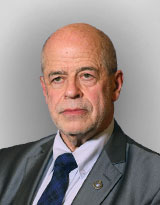
Yu. V. Lukina
Diplomatic Academy of the Ministry of Foreign Affairs of the Russian Federation
Russian Federation
Russian Federation
Yulia V. Lukina. CandSc. (Politic.). Senior lecture, Department of English № 2
Address: building 1, 53/2, Ostozhenka st., Moscow, 119021, Russian Federation
References
1. Belousov А. From Propaganda to Public Relations (to the Publication of the Russian Edition of Edward Bernays’ book “Propaganda” (1928). Svobodnaya mysl’ [Free Thought]. 2010; 8(1615):199–211 [In Russian.]
2. Vorobyev S.V. Historical and Modern Aspects of Enemy Image Formation in Modern International Relations. International Relations in the Conditions of New Security Threats: Collection of Materials of the First International Scientifi and Practical Conference, Moscow, April 28, 2022. ed. by O.I.Titkova, T.V.Kashirina. Moscow: Moskovskij gosudarstvennyj lingvisticheskij universitet [Moscow State Linguistic University], 2023:27–33 [In Russian].
3. Karpovich O.G. Information Warfare against Russia in the Conditions of Implementation of a Special Military Operation. UKRAINIAN crisis in the Conditions of Transformation of the Modern World Order: Development Trends, Threats and Perils for Russia / Academy of Military Sciences, Research Center for National Security Problems. 2nd edition, revised. Moscow: Izdatel’stvo «Ekon–Inform» [Publishing House «Econ–Inform»]. 2022:15–22 [In Russian].
4. Karpovich O.G. Information Wars in Politics and Competition of Modern States. Informacionnye vojny [Information Wars]. 2017; 4(44):2–8 [In Russian].
5. Karpovich O.G., Shangaraev R.N. Cognitive Wars in the Context of Strategic Communications: a monograph. Moscow: Diplomaticheskaya akademiya MID Rossii [Diplomatic Academy of the Ministry of Foreign Affairs of Russia], 2024. 268 p. [In Russian].
6. Korotkov S. Malicious Disinformation Campaigns – a Destabilizing Factor in Maintaining International Information Security. Mezhdunarodnaya zhizn’ [International Life]. 2022; 11:68–75 [In Russian]. Available from: https://interaffairs.ru/jauthor/material/2745.
7. Lasswell H.D. Propaganda Technique in the World War. Translated from English by V.G.Nikolaev. Moscow.: RAN INION [RAS INION]. 2021. 237 p. [In Russian].
8. Lukina Yu.V. Information Campaign of the Collective West against Russia at the Present Stage: Theses... CandSc (Political): 5.8.2. International Relations, Global and Regional Studies. Moscow, 2025. 264 p. [In Russian]. Available from: http://dipacademy.ru/documents/9687/Диссертац.рукопись_Лукиной_Ю.В._окончательный.pdf.
9. Manoilo A.V. Information Warfare in the Context of the Special Military Operation in Ukraine. Mezhdunarodnaya zhizn’ [International Life]. 2022; 12:74–83 [In Russian]. Available from: https://interaffairs.ru/jauthor/material/2762.
10. Neimark M.A. Red Lines of Russia’s Strategic Security: From Metaphor to Critical Alternative. Obozrevatel – Observer[Browser–Observer].2022;1(384):5–14[InRussian]. https://doi.org/10.48137/2074-2975_2022_01_5.
11. Petrenko A.I. Fakes as a Tool of Deformation of youth Consciousness. Grazhdanin. Vybory. Vlast’ [Citizen. Elections. Power]. 2021; 4(22):90–102 [In Russian].
12. Sinitsyn A.Y. Integration processes in the Asia–Pacifi Region: Russia – ASEAN. Mezhdunarodnaya zhizn’ [International Life]. 2018; 7:88-96 [In Russian].
13. Surma I.V. Digital Diplomacy and Information Confrontation in World Politics. Public Administration of the Russian Federation: Challenges and Prospects: Proceedings of the 15th International Conf., Moscow, May 25, 2017. Moscow: KDU [KDU], Universitetskaya kniga [University Book], 2018:531–539 [In Russian]. Available from: https://www.perspektivy.info/rus/gos/cifrovaja_diplomatija_i_informacionnoje_protivostojanije_v_mirovoj_politike_2018-06-09.htm.
14. Tsvetov P.Y. Manipulation of Historical Consciousness in North Vietnam during the Years of Repulsion of US Imperialism Aggression in 1965-1975. Actual Problems of Vietnamese Studies – 2018. Moscow: IDV RAN [IDV RAS], 2018:81–87 [In Russian]. EDN: JREUCL.
15. Digital International Relations: in two volumes / ed. by E.S.Zinovieva, S.V.Shitkov. Vol. 1. Moscow: Aspect Press, 2023. 354 p. [In Russian].
16. Bernays E.L. Propaganda. (1928) New York, 2005 [In English].
17. Bobric G.–D. The Overton Window: A Tool for Information Warfare, “Carol I”. Bucharest: National Defense University, 2021 [In English].
18. Buzan В., Weaver О., De Wilde J. Security: A new framework for analysis. Lynne Rienner Publishers, 1998 [In English].
19. Buzan В., Weaver О., De Wilde J. Security: A new framework for analysis. Lynne Rienner Publishers, 2010 [In English].
20. Herman E., Chomsky N. Manufacturing Consent, The Political Economy of the Mass Media / with a new afterword by Edward S.Herman. London: The Bodley Head, 2008 [In English]. Available from: https://files.libcom.org/files/2022-04/manufacturing_consent.pdf
21. Illul J. Propaganda. New York, 1962 [In English]. Available from: https://archive.org/details/ Propaganda_201512.
22. Laruelle M. Accusing Russia of Fascism. Russia in Global Affairs. 2020; 18(4):100–123 [In English]. https://doi.org/10.31278/1810-6374-2020-18-4-100-123.
23. Lasswell H.D. Propaganda Technique in the World War. New York: Peter Smith, 1938 [In English]. Available from: https://archive.org/details/PropagandaTechniqueInTheWorldWar.
24. Lewandowsky S., Ecker U.K.H., Seifert C.M., Schwarz N. Misinformation and its Correction: Continued Infl and Successful Debiasing. Psychological Science in the Public Interest. 2016; 13(3):106–131 [In English].
25. Lippmann W. Public Opinion. New York: Harcourt, Brace and Company, 1922. 185 p. [In English]. Available from: https://www.globalgreyebooks.com/public-opinion-ebook.html.
26. Loftus E.F. Planting Misinformation in the Human Mind: A 30-year Investigation of the Malleability of Memory. Learning Memory. 2005; 12(4):361–6 [In English]. https://doi.org/10.1101/lm.94705. Available from: https://learnmem.cshlp.org/content/12/4/361.full.
27. Prosser M.B. Memetics–a Growth Industry in us Military Operations. Virginia, 2006. 23 p. [In English]. Available from: https://web.archive.org/web/20250318215440/https://apps.dtic.mil/sti/pdfs/ADA507172.pdf.
Review
For citations:
Lukina Yu.V. Informational Control as a Mechanism of Global Governance, Modern Status, Methods and Key Actors. Russia & World: Sc. Dialogue. 2025;(4):58-74. (In Russ.) https://doi.org/10.53658/RW2025-4-4(18)-58-74
Views:
787
JATS XML



 Email this article