


The Genesis of Scientific Ideas About Military-Civil Relations Before the 20th Century

https://doi.org/10.53658/RW2025-4-4(18)-239-254
Abstract
The article is a comprehensive study of the historical evolution of civil-military relations through the prism of theoretical concepts and ideas formed before the beginning of the 20th century. The work examines the views of thinkers of antiquity, the Middle Ages, the Renaissance and Modern times regarding the formation of military institutions, the principles of recruitment, the dynamics of relations between military and civilian structures, as well as issues of the division of powers between military and political leadership, military participation in coups and their interaction with religious institutions. The methodological basis of the research is an interdisciplinary approach that integrates elements of political philosophy, military history, sociology and cultural studies. Within the framework of this approach, a comparative analysis of theoretical concepts from different historical eras is carried out, which makes it possible to identify the continuity and transformation of key ideas in the context of changing socio-political conditions. The results of the study demonstrate the high importance of referring to historical experience for a deep understanding of modern transformations in the field of civil-military relations. In particular, the analysis of ancient and medieval sources makes it possible to comprehend the genesis of the concepts of civilian control over the army, as well as the mechanisms of legitimization of military power. The Renaissance and Modern Times, in turn, reveal the evolution of ideas about the professionalization of the army, the role of military leadership in political life, and the influence of religious institutions on military organization. Special attention is paid to the issues of interaction between military and civilian structures in the context of political crises and instability. The study shows that historical precedents of military involvement in coups not only confirm their potential role as a political force, but also reveal complex mechanisms of interaction with civil society and political elites.
About the Author
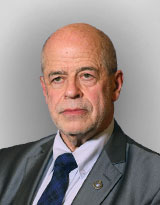
I. Kh. Salavatov
MGIMO University
Russian Federation
Russian Federation
Ilyas Kh. Salavatov. Postgraduate Student of Department of Political Theory
Address: 76, Vernadsky Avenue, Moscow, 119454, Russian Federation
References
1. Hobbes, T. Leviathan, or the Matter, Form and Power of a Commonwealth Ecclesiastical and Civil [In Russian]. Available from: https://www.civisbook.ru/files/File/Gobbs_Leviafan.pdf
2. Clausewitz C. On War [In Russian]. Available from: http://militera.lib.ru/science/clausewitz/08.html/
3. Machiavelli N. The Prince [In Russian]. Available from: https://www.booksite.ru/fulltext/mak/eav/ell/makeavelli/gosudar/index.htm/.
4. Marx K., Engels F. Capital. Ed. by V.Adoratsky. Moscow: PARTIZDAT CzK VKP(b) [PARTIZDAT of the Central Committee of the CPSU(b)], 1937; 17 [In Russian].
5. Plato. The Republic [In Russian]. Available from: https://www.civisbook.ru/files/File/Platon_Gosudarstvo.pdf.
6. Sun Tzu. The Art of War [In Russian]. Available from: https://artsakhlib.am/wp-content/uploads/2020/02/%D0%A1%D1%83%D0%BD%D1%8C-%D0%A6%D0%B7%D1%8B-%D0%98%D1%81%D0%BA%D1%83%D1%81%D1%82%D0%B2%D0%BE-%D0%B2%D0%BE%D0%B9%D0%BD%D1%8B.pdf.
7. Antoni N., Giannopapa C., Schrogl K. Legal and Policy Perspectives on Civil–Military Cooperation for the Establishment of Space Traffic Management. Space Policy. 2020; 53 [In English]. https:// doi.org/10.1016/j.spacepol.2020.101373.
8. Augustine A. Contra Faustum [In English]. Available from: https://www.newadvent.org/fathers/140622.htm.
9. Brooks R.A. Integrating the Civil–Military Relations Subfield. Annual Review of Political Science. 2019; 22:379–398 [In English]. Available from: https://www.annualreviews.org/doi/10.1146/annurev-polisci-060518-025407.
10. Bull H. The Anarchical Society: A Study of Order in World Politics. Columbia University Press, 1977 [In English].
11. Campioni L., Poltronieri F., Stefanelli C., Suri N., Tortonesi M., Wrona K. Enabling Civil–Military Collaboration for Disaster Relief Operations in Smart City Environments. Future Generation Computer Systems. 2023; 139(3):181–195 [In English]. https://doi.org/10.1016/j.future.2022.09.020.
12. Chorley-Schulz J. Soldiers and the State in Marx and Engels. Marxism and the Capitalist State: Towards a New Debate. Ed. by R.Hunter, R.Khachaturian, E.Nanopoulos. Cham: Springer International Publishing, 2023:121–139 [In English]. https://doi.org/10.1007/978-3-031-36167-8_6.
13. Dimitriu G. Clausewitz and the Politics of War: A Contemporary Theory. The Journal of Strategic Studies. 2020; 43(5):645–685 [In English]. https://doi.org/10.1080/01402390.2018.1529567.
14. Fahey J.J. War and the Christian Conscience. Forgotten Books, 2018:26 [In English].
15. Hartigan R.S. St.Augustine on War and Killing: The Problem of the Innocent. Journal of the History of Ideas. 1966; 27:195–204 [In English].
16. Huntington S.P. The Soldier and the State; the Theory and Politics of Civil-Military Relations. Cambridge: Belknap Press of Harvard University Press, 1957 [In English].
17. Janowitz M. The Professional Soldier: A Social and Political Portrait. Glencoe, Illinois: Free Press, 1960 [In English].
18. Kajanto I. Tacitus Attitude to War and the Soldier. Latomus. 1970; 29(3):699–718 [In English].
19. Kamandaki. Kamandakiya Nitisara or the Elements of Polity. Ed. Manmatha Nath Dutt. Elysium Press, 1896 [In English].
20. Kant I. Perpetual Peace. Tr. M.C.Smith [In English]. Available from: https://www.gutenberg.org/ files/50922/50922-h/50922-h.htm.
21. Kautilya. Arthashastra Tr. R.Shamasastry [In English]. Available from: https://library.bjp.org/ jspui/bitstream/123456789/80/1/R.%20Shamasastry-Kautilya%27s%20Arthashastra%20%20%20%281915%29.pdf.
22. Langan J. The Elements of St.Augustine’s Just War Theory. The Journal of Religious Ethics. 1984; 12(1):19–38 [In English].
23. Manu. The Laws of Manu. Tr. G.Bühler [In English]. Available from: https://sacred-texts.com/hin/ manu.htm.
24. McFate S. The Modern Mercenary: Private Armies and What They Mean for World Order. Oxford University Press, 2014 [In English].
25. Miller R.B. Aquinas and the Presumption against Killing and War. The Journal of Religion. 2002. 82(2):173–204 [In English].
26. Montesquieu C.L. Considérations sur les Causes de la Grandeur des Romains et de Leur Décadence (3e éd.). Ed. par M.L’abbé, C.Blanchet. Paris: C.Delagrave, 1907 [In French].
27. Philosophers of War: The Evolution of History’s Greatest Military Thinkers. Vol. 1. Ed. D.Coetzee, L.Eysturlid. Praeger, 2013. 191 p. [In English]. Available from: http://digitalcommons.imsa.edu/hss_pr/8/.
28. Plutarch. Lycurgus [In English]. Available from: https://classics.mit.edu/Plutarch/lycurgus.html.
29. Raj E.S. The origins of the caste system. Transformation. 1985; 2(2):10–14 [In English].
30. Rousseau J. Du Contract Social ou Principes du Droit Politique [In French]. Available from: https:// www.earlymoderntexts.com/assets/pdfs/rousseau1762.pdf.
31. Runciman W.G. Greek Hoplites, Warrior Culture, and Indirect Bias. The Journal of the Royal Anthropological Institute. 1998; 4(4):731–751 [In English].
32. Saxe M. Mes reveries. Amsterdam, Leipzig, 1757 [In French]. Available from: https://gallica.bnf.fr/ark:/12148/bpt6k865593.
33. Scott J.R. The Citizen Soldier. A Sermon Preached at the Chapel of the Marine School, Dublin, before His Grace the Duke of Leinster, and the regiment Dublin volunteers commanded by him, on Sunday, November the 5th 1780. Eighteenth Century Collections Online:1–24 [In English]. Available from: https://wellcomecollection.org/works/hb2wcy9x.
34. Solomon, N. Judaism and the Ethics of War. International Review of the Red Cross. 2005; 87(858):295–392 [In English]. Available from: https://www.icrc.org/en/doc/assets/files/other/irrc_858_solomon.pdf.
35. The Oxford Handbook of the State in the Ancient Near East and Mediterranean / ed. P.F.Bang, W.Scheidel. Oxford Academic, 2013. 576 p. [In English].
36. Tocqueville A. Democracy in America. Classics in Political Science. Indianapolis: Liberty Fund, 2010 [In English]. Available from: https://www.marxists.org/reference/archive/de-tocqueville/democracy-america/ch40.htm.
37. White C.E. Scharnhorst’s Mentor: Count Wilhelm zu Schaumburg-Lippe and the Origins of the Modern National Army. War in History. 2017; 24(3):258–285 [In English].
Review
For citations:
Salavatov I.Kh. The Genesis of Scientific Ideas About Military-Civil Relations Before the 20th Century. Russia & World: Sc. Dialogue. 2025;(4):239-254. (In Russ.) https://doi.org/10.53658/RW2025-4-4(18)-239-254
Views:
222
JATS XML



 Email this article